Best Under Cabinet Lighting for Kitchens, Puck, Strip or Bar
AQ Lighting Sep 22nd 2026
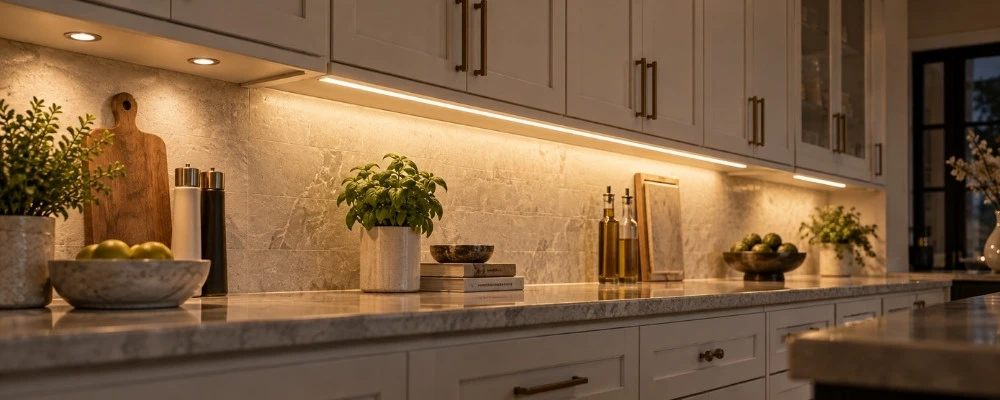
Under cabinet lighting can make a kitchen safer, easier to use, and more inviting after dark. It brightens the counter where you chop vegetables, read recipes, clean dishes, and prepare morning coffee. It can also add a soft evening glow when bright ceiling lights feel unnecessary. The difficult part is not deciding whether you need it. The challenge is choosing between puck lights, flexible LED strips, and rigid light bars. Each option creates a different effect and works best in certain cabinet layouts.
For most kitchens, a diffused LED strip or light bar is the best starting point for even countertop coverage. Puck lights are useful when you want focused pools of light or need to work around cabinet dividers. However, the right choice also depends on your counter surface, available power, cabinet depth, and desired appearance.
What Job Should Your Kitchen Lighting Perform
Start by deciding what the light needs to do. Task lighting should give you clear, even coverage across food preparation, cooking, and cleaning areas. Accent lighting can be softer because its main purpose is to add depth and warmth. List the activities that take place below each cabinet run. Give sinks, cutting areas, cooking stations, and small appliance zones priority. Decorative corners and display cabinets may need less light.
Your finishes also affect the result. Dark stone can absorb light, while polished counters may reflect a bright source. Deep cabinets can create shadows near the front of the worktop if the light sits too close to the backsplash. A simple test can prevent a disappointing installation. Temporarily position one light and view it at night. Check the counter while standing, sitting, and working in the kitchen.
When Are Puck Lights the Best Choice
Puck lights are small, round fixtures that create focused circles of light. They work well under short cabinet sections, inside display cabinets, and around framing that interrupts a continuous run. You can use puck lights when you want to highlight a coffee station, serving area, or decorative backsplash. Their focused effect can add visual interest without lighting the entire counter at the same level.
However, spacing matters. Pucks placed too far apart may create alternating bright and dark areas. Installing them closer together helps the individual beams overlap, but the result may still look more defined than a continuous strip. Surface-mounted pucks are often easier to add to an existing kitchen. Recessed versions offer a cleaner appearance, but they require enough cabinet depth. In either case, confirm that wiring and future replacement access will remain practical.
Why Choose LED Strip Cabinet Lights
LED strip cabinet lights are thin, flexible, and well suited to long or irregular cabinet runs. They can follow corners and fit into areas where a fixed-length fixture may leave unwanted gaps. A bare strip may show individual points of light, especially on glossy countertops. Placing it inside a compatible channel with a diffuser creates a softer and more continuous line. The channel also helps protect the strip from everyday contact.
When comparing LED tape light, consider the complete setup. The strip, channel, diffuser, driver, connectors, and controls must work together. Selecting only the visible tape may lead to missing or incompatible parts later. LED under cabinet lighting is especially useful when a custom fit matters. Still, every cut, connection, and corner should be planned before installation begins. A measured cabinet drawing makes the process much easier.
Are Light Bars Better for Even Coverage
Light bars are rigid fixtures that provide a smooth line of illumination. Many include a built-in diffuser, which helps soften the light and conceal individual light points. They are a practical option for straight cabinet runs with predictable lengths. They may also require fewer separate visible components than a custom strip system. This can simplify both product selection and installation. Light bars cannot always follow corners or unusual cabinet shapes. Dividers may require linking cables, separate feeds, or more than one fixture. Measuring each section before ordering will help prevent gaps.
Choose light bars when you want reliable task lighting and a clean finished appearance. They can be especially useful during a retrofit when you need a straightforward fixture that fits the existing cabinet layout.
How Should You Choose Power, Color, and Controls
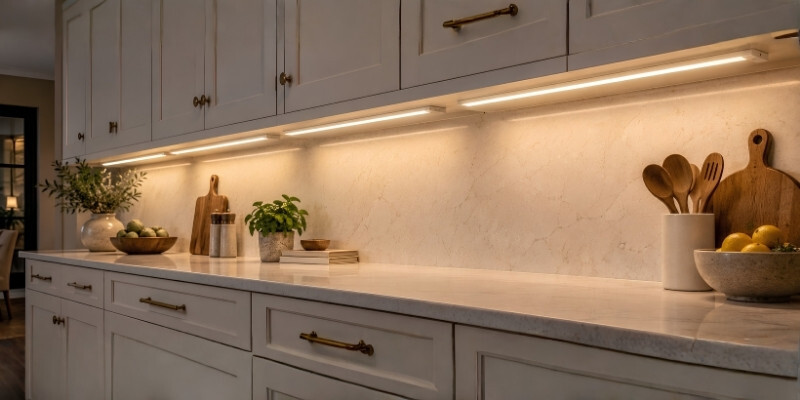
Your available power can quickly narrow the options. Low voltage under cabinet lighting commonly uses a separate driver or transformer. It works well with slim strips and small puck lights, but the driver must remain accessible. A 120V fixture may suit a hardwired kitchen where suitable power is already available. It can reduce the number of separate system components. However, electrical work should follow local requirements and the manufacturer’s instructions. Next, consider the color of the light. Warm white often complements wood cabinets, natural stone, and traditional kitchens. A more neutral white can give modern work areas a crisp and clear appearance.
Dimming adds flexibility. Brighter light supports chopping and cleaning, while a lower setting creates a comfortable evening glow. Before buying, confirm that the fixture, driver, switch, and dimmer are designed to operate together.
Where Should Under Cabinet Lights Be Installed
In many kitchens, mounting the light toward the front of the upper cabinet sends more illumination across the work surface. It also reduces the shadow created when someone stands at the counter. However, the ideal position depends on cabinet depth, the fixture’s light pattern, and the surface below. Glossy stone, polished tile, and reflective appliances may show glare or visible light points more easily.
A front lip can help hide the fixture from normal sightlines. A diffuser can also soften the appearance and reduce harsh reflections. Check the installation while seated at a nearby island or dining area because a concealed fixture may become visible from a lower angle. Do not commit to every cabinet run after testing only an empty room in daylight. Position one fixture, turn off the main lights, and view the result during actual kitchen tasks. Small placement changes can make a noticeable difference.
How Can AQ Lighting Group Help You Plan the System
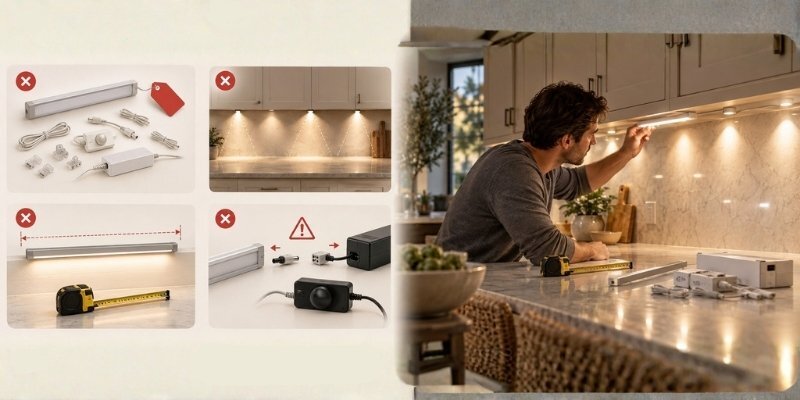
A complete plan includes more than the visible fixture. Before ordering under cabinet lighting, record every cabinet length, corner, power feed, and control zone. Confirm the fixture size, operating voltage, driver capacity, connectors, dimmer compatibility, mounting accessories, and suitability for its location. Areas near sinks may have different requirements from dry cabinet sections. You should also plan how each component can be reached for cleaning, adjustment, or future replacement.
AQ Lighting Group offers lighting choices for homeowners, designers, contractors, and property professionals planning functional indoor spaces. The goal is to help customers compare options based on the kitchen layout and the desired result, rather than choosing a fixture by appearance alone. For larger renovations, prepare a simple fixture schedule. Record the selected model, quantity, power requirements, controls, accessories, and installation notes. This helps reduce accidental substitutions and gives the owner useful information for future maintenance.
What Common Buying Mistakes Should You Avoid
Do not choose a system based only on fixture shape or price. A low-cost light may require additional connectors, controls, or mounting parts that change the total project cost. Avoid using one spacing rule for every cabinet run. Different puck lights can produce different patterns, and rigid bars come in fixed lengths. Always compare the selected fixture with the actual cabinet measurements. Do not overlook power and control compatibility. A light, driver, and dimmer may look suitable separately but may not work correctly as one system. Confirm compatibility before installation.
Finally, do not place a bright source directly within a normal viewing angle. Visible light points and reflected glare can make an otherwise attractive kitchen uncomfortable. Testing one section first is a simple way to catch these problems.
Final Thoughts
The best under cabinet lighting starts with the work surface, not the fixture shape. Puck lights provide focused pools of light, LED strips offer flexible continuous coverage, and light bars deliver smooth output in practical fixed lengths. Before ordering, map each cabinet run and check the power source, viewing angle, counter finish, controls, and service access. Then test one representative section whenever possible.
A thoughtful under cabinet lighting plan can make everyday cooking safer and more comfortable while giving the kitchen a polished evening look. Compare the complete system now so you can avoid dark gaps, visible dots, and unnecessary installation changes later.
FAQs
➜ Which type of under cabinet lighting gives the most even light?
A diffused LED strip or continuous light bar usually gives the most even countertop coverage. Both options reduce the bright and dark pools commonly associated with widely spaced puck lights.
➜ Are puck lights good for kitchen countertops?
Puck lights work well for short sections and focused lighting. For long counters, careful spacing is needed to prevent visible gaps between each pool of light.
➜ Where should LED under cabinet lighting be placed?
Placement near the cabinet’s front edge often sends more light across the work surface. Test the position first because cabinet depth and reflective counters can affect glare.
➜ Can low voltage under cabinet lighting be dimmed?
Yes, when the lights, driver, and dimmer are compatible. Check the manufacturer’s documentation before purchasing every part of the system.
➜ Are LED strip cabinet lights better than light bars?
LED strip cabinet lights are better for custom lengths and corners. Light bars are often easier for straight runs where simple installation and predictable fixture lengths matter.