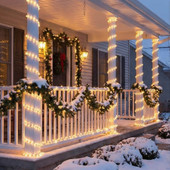

One of the most confusing parts of holiday decorating is figuring out how many Christmas lights can be safely connected together. You see the beautiful rooflines, wrapped trees, glowing pathways, and bright window displays in your neighborhood and wonder how people manage long, continuous runs without blowing fuses or risking electrical issues.
The truth is that connecting Christmas lights safely is very simple once you understand wattage, amperage, and the limits of your light strings. In fact, most homeowners only need a few basic numbers to work confidently. This guide breaks everything down in a friendly way and includes real examples that you can use for your own display.
To make it even easier, we will reference commercial grade string lights, LED wattages, and durable outdoor products like the ones offered by AQ Lighting. These options make it much safer to build long continuous runs compared to older, high wattage incandescent strands.
Let’s start with the question everyone asks.
Every light string draws a certain amount of power. When you connect several strands together, that power adds up. Your outlet and extension cords can only handle a certain load. When you exceed that limit, you create issues like:
While modern LED lights are much safer than old incandescent bulbs, they still require smart planning.
The goal is simple: create a bright, beautiful holiday display that is safe and reliable from the moment you plug it in.
If you want a simple rule you can always remember:
Total wattage of your connected lights must stay below 80 percent of the outlet capacity.
A standard outdoor household outlet in the United States is 15 amps. A 15 amp outlet supports a maximum of 1800 watts. Eighty percent of that limit is 1440 watts. This 80 percent rule helps prevent overheating and ensures safe use.
So at a minimum, you want your total light wattage to stay under 1440 watts per outlet.
But here is the good news: most LED Christmas lights use very little power. This is why you can safely connect many more LED strings compared to older incandescent ones.
LED String Light Example:
A typical LED holiday light string uses between 3 and 7 watts.
Incandescent String Light Example:
A typical incandescent C7 or C9 string uses between 40 and 140 watts.
This is a huge difference. Let’s look at how that plays out.
Here is an easy breakdown:
This means you can usually connect a large number of LED strands without coming close to the safety limit.
Most commercial grade LED strings from AQ Lighting are designed for long continuous runs. Some can be connected 20, 30, or even 45 strands end to end depending on wattage.
Always check the tag on the light string. Manufacturers are required to list the maximum number of connections. AQ Lighting’s commercial strings clearly list their safe connect limits, which makes planning simple.
Real Example:
If one LED string is rated at 4 watts and the manufacturer says you can connect 45 sets, that would still only be about 180 watts total. This is far below your outlet limit.
This is where most people get surprised. Old style incandescent strings use so much wattage that you can typically connect only three to five strands before you hit the limit.
Real Example:
If each incandescent C9 strand uses 100 watts, you can only connect about 14 strands before you reach 1400 watts. Most manufacturers limit you to far fewer, usually between 3 and 5 per run.
This is one reason why the switch to LED lighting has become almost universal. Not only do LEDs last longer and stay cool, but they allow you to create large displays without risking overload.
AQ Lighting carries commercial grade string sets designed specifically for long runs and outdoor weather conditions. Commercial stringers often use stronger wiring, sealed sockets, and optimized wattage levels that allow you to safely connect far more strands.
If you plan to light a large roofline, wrap tall trees, or outline long fences, commercial options are the safest choice. They handle moisture, sun exposure, and temperature changes better than standard retail grade lights.
Example 1: Roofline Lighting
Let’s say you want to outline a 60 foot roofline using LED C9 bulbs.
If each socket string uses 8 watts per 25 foot section, you might need three sections. The total wattage would be around 24 watts.
This means you could run the entire roofline on a single outlet without any trouble.
If you used incandescent strings for the same job, you might already be at 300 watts for the same length.
Example 2: Wrapping a Tree
If you want to wrap a medium sized tree with 20 strings of LED mini lights, they might use around 80 watts total.
That barely touches your outlet limit and remains well within the safe zone. With incandescent versions, the wattage could jump to hundreds of watts, likely needing multiple outlets.
Example 3: Large Property Display
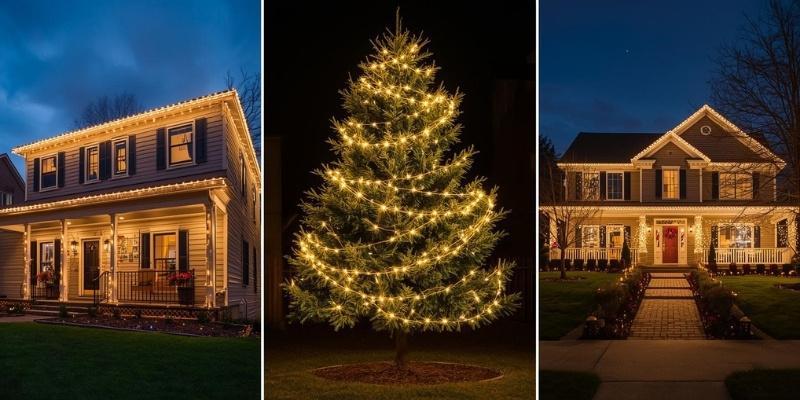
Let’s imagine you are planning a full front yard holiday setup with:
With LED lights, you might be able to power the entire front yard with one or two outlets. With incandescent lights, you might need four or more separate circuits.
This is why LED holiday lighting has become the standard for both homeowners and commercial decorators. The efficiency allows you to dream big without worrying about overload.
Extension cords play an important role in safe installations. Always use outdoor rated, heavy duty cords. Look for cords rated for at least 13 to 15 amps. Never overload a single extension cord by directing too many light runs into one connection point. AQ Lighting carries outdoor rated extension cords that pair safely with commercial lighting products.
Before connecting anything, look for these details on the tag attached to the power cord:
If the light string says you can connect up to 30 sets, do not exceed that limit even if the wattage seems low. These limits are set by the wiring design inside the string.
Always follow the rating printed on the product.
Here are some simple habits that prevent overload and make your installation last longer:
These small steps help you create a display that is bright, strong, and ready for winter weather.
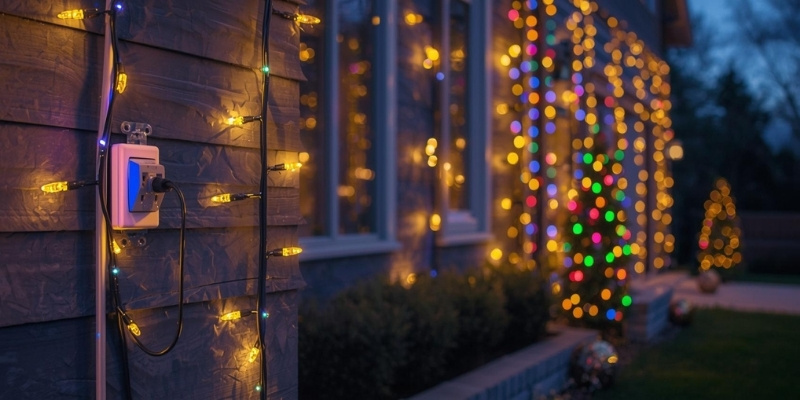
Knowing how many Christmas lights you can safely connect is the key to creating a holiday display that looks amazing and works smoothly all season. Once you understand wattage, outlet capacity, and manufacturer limits, everything becomes easy.
LED Christmas lights, especially commercial-grade options from AQ Lighting, allow you to build longer runs, use fewer outlets, and enjoy reliable performance. With smart planning and outdoor-rated extension cords, you can decorate confidently and safely.
This season, you can go as big or as simple as you want. Just follow the basic numbers and enjoy a holiday display that glows beautifully every evening.
Check the wattage on each strand and follow the manufacturer’s maximum connection rating. Make sure your total wattage stays under 80 percent of your outlet’s capacity.
LED lights use very low wattage, often only a few watts per string. Incandescent lights use significantly more power, so you reach the safety limit much faster.
A typical 15 amp outlet supports up to 1800 watts, but staying under 1440 watts gives you a safer margin during long holiday use.
No. Mixing the two can overload the wiring, cause uneven power draw, and shorten the life of your lights.
Yes. Use heavy duty, outdoor rated extension cords. They handle moisture and cold temperatures safely and prevent overload issues.