Low Voltage Landscape Lighting: The Complete Homeowner & Contractor Guide for 2026
AQ Lighting Aug 3rd 2026

Walk through a beautifully lit property at night and one thing becomes immediately obvious: great outdoor lighting changes everything. The pathways feel safer. The garden looks more impressive. Architectural details stand out. Outdoor living spaces become more inviting. Even the overall value and curb appeal of the property seem higher.
What many people do not realize is that most professionally designed outdoor lighting systems rely on the same technology: low voltage landscape lighting. Whether you are a homeowner planning a backyard upgrade or a contractor designing a complete outdoor lighting system, understanding how low-voltage lighting works can help you create safer, more efficient, and better-looking outdoor spaces. In this guide, we'll cover everything from 12V systems and transformer sizing to voltage drop, fixture selection, and installation planning.
Why Low Voltage Landscape Lighting Is So Popular
Outdoor lighting has evolved significantly over the past decade. Homeowners no longer want oversized floodlights blasting their entire property with harsh brightness. Instead, they want layered lighting that enhances outdoor spaces while maintaining a warm and welcoming atmosphere.
That is exactly where low voltage landscape lighting excels. Unlike traditional line-voltage systems, low-voltage lighting typically operates on 12 volts, making it safer, more energy-efficient, and easier to install. The lower voltage reduces electrical risk while allowing for greater flexibility in landscape design. This combination of safety, efficiency, and performance is why low-voltage systems dominate modern residential landscape lighting projects.
Understanding How a 12V Landscape Lighting System Works
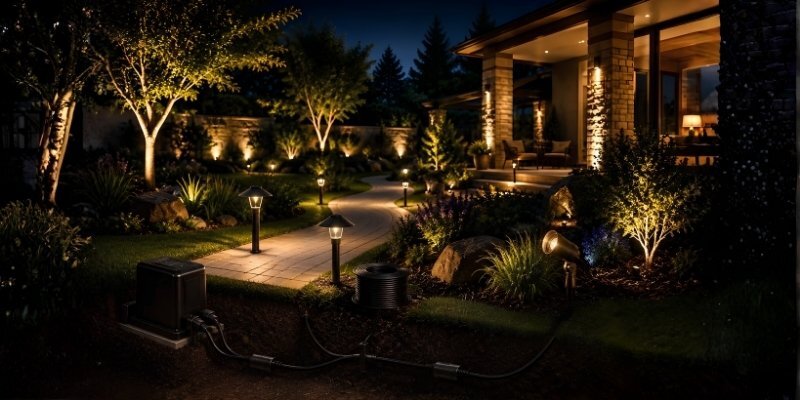
At its core, a low-voltage system is relatively simple. Every system consists of three primary components:
- Transformer
- Low-voltage cable
- Lighting fixtures
The transformer converts standard household electricity into 12-volt power suitable for outdoor lighting. That power travels through low-voltage cable to illuminate the fixtures installed throughout the landscape. While the concept is simple, proper planning makes a significant difference in performance. The most successful lighting systems are designed with future expansion, voltage management, and fixture placement in mind.
Why Homeowners Prefer Low Voltage Systems
One of the biggest advantages of low-voltage lighting is flexibility. Homeowners can add lighting to pathways, gardens, patios, decks, and outdoor entertaining spaces without the complexity often associated with traditional electrical systems. Other advantages include:
- Lower operating costs
- Safer installation
- Easier fixture relocation
- Energy-efficient LED compatibility
- Reduced maintenance requirements
These benefits make low-voltage systems one of the smartest long-term investments for outdoor spaces.
Choosing the Right Transformer
The transformer is the heart of every low-voltage lighting system. Unfortunately, it is also one of the most overlooked components. Many lighting problems can be traced back to an improperly sized transformer. When the transformer cannot supply enough power, fixtures may appear dim or perform inconsistently. The general rule is simple:
Calculate the total wattage of all fixtures and select a transformer with additional capacity for future expansion. For example, if your fixtures require 120 watts, choosing a transformer rated for 150 watts or more provides valuable flexibility and prevents overloading. Contractors often recommend leaving 20% to 30% capacity available for future additions.
Understanding Voltage Drop
Voltage drop is one of the most important concepts in landscape lighting design. Yet many homeowners have never heard of it. As electricity travels through cable, some voltage is naturally lost along the way. The longer the cable run and the more fixtures attached, the greater the voltage drop becomes.
When voltage drop becomes excessive, fixtures farther from the transformer may appear dimmer than those located nearby. This creates uneven lighting and reduces overall system performance. Fortunately, proper planning helps minimize voltage drop. Strategies include:
- Using larger gauge cable
- Shortening cable runs
- Creating multiple lighting zones
- Distributing fixtures evenly
Contractors who understand voltage management can create more consistent and professional-looking lighting installations.
Pathway Lights: The Foundation of Most Systems
For many properties, pathway lights serve as the foundation of the entire lighting design. These fixtures improve visibility while guiding movement through the landscape. They are commonly installed along:
- Walkways
- Driveways
- Garden borders
- Entry paths
- Outdoor seating areas
The goal is not excessive brightness. Instead, pathway lighting should create a comfortable visual flow that improves safety while enhancing the appearance of the property. Well-spaced LED pathway fixtures often provide the best balance between functionality and aesthetics.
Spotlighting Creates Visual Drama
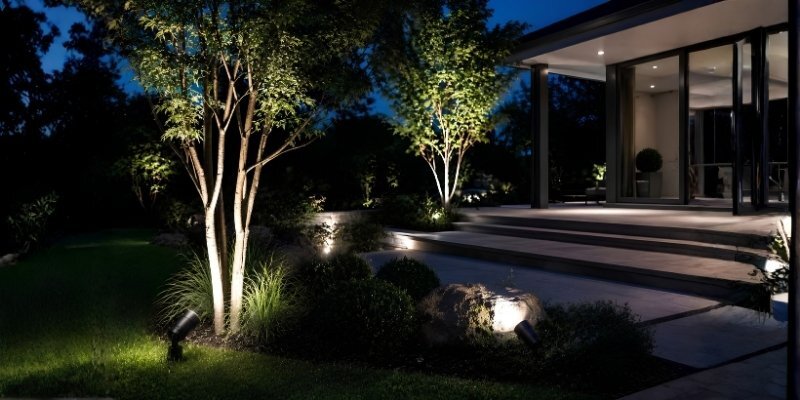
If pathway lights guide movement, spotlights create impact. Spotlights are used to highlight focal points throughout the landscape. Popular spotlight applications include:
- Trees
- Architectural features
- Water features
- Decorative stonework
- Outdoor sculptures
Professional lighting designers often use spotlights to create depth and dimension within the landscape. The result is a property that feels visually dynamic rather than flat and overly illuminated.
Why In-Ground Lights Continue to Grow in Popularity
One of the fastest-growing trends in landscape design is the use of in-ground lights. Unlike traditional fixtures that remain visible above the surface, well lights sit flush with the ground. This creates a cleaner and more modern appearance while allowing dramatic uplighting effects. In-ground fixtures work exceptionally well for:
- Large trees
- Building facades
- Landscape accents
- Driveway entrances
Homeowners who prefer minimalist outdoor designs often gravitate toward well lighting because the fixtures remain largely hidden during the day.
Garden Lights Bring Landscaping to Life
Many homeowners spend thousands of dollars creating beautiful landscapes but fail to enjoy them after sunset. That is where properly placed garden lights become incredibly valuable. Strategically illuminating flower beds, shrubs, and decorative features extends the visual impact of the landscape well into the evening.
Modern LED garden lighting also allows for subtle illumination rather than overwhelming brightness. The result feels elegant, sophisticated, and highly intentional.
Deck Lighting Improves Safety and Ambiance
Outdoor living spaces continue to be a major design priority in 2026. Decks, patios, pergolas, and seating areas are now viewed as extensions of the home. Lighting plays a major role in making these spaces functional after dark. Deck lighting can be integrated into:
- Stair risers
- Railings
- Posts
- Seating areas
- Outdoor kitchens
Properly designed deck lighting improves safety while creating an inviting atmosphere for entertaining and relaxation.
Why Landscape Lighting Kits Are Popular for DIY Projects
Many homeowners want professional-looking results without hiring a contractor for every project. That is why landscape lighting kits have become increasingly popular. These kits typically include fixtures, transformers, connectors, and cable designed to work together as a complete system.
For smaller residential projects, landscape lighting kits can simplify installation while reducing compatibility concerns. However, larger properties often benefit from custom-designed systems that allow for greater flexibility and scalability.
Contractor Buying Tips for Better Results
Contractors evaluating lighting systems should look beyond initial fixture cost. Long-term performance matters far more than short-term savings. Key considerations include:
- Fixture material quality
- Transformer reliability
- LED efficiency
- Weather resistance
- Ease of maintenance
- Expandability
Brass and copper fixtures typically offer superior durability compared to lower-cost alternatives. Contractors also benefit from selecting systems that simplify installation and future service work. A slightly higher upfront investment often results in fewer callbacks and greater customer satisfaction.
Why AQ Lighting Is a Strong Choice for Landscape Lighting
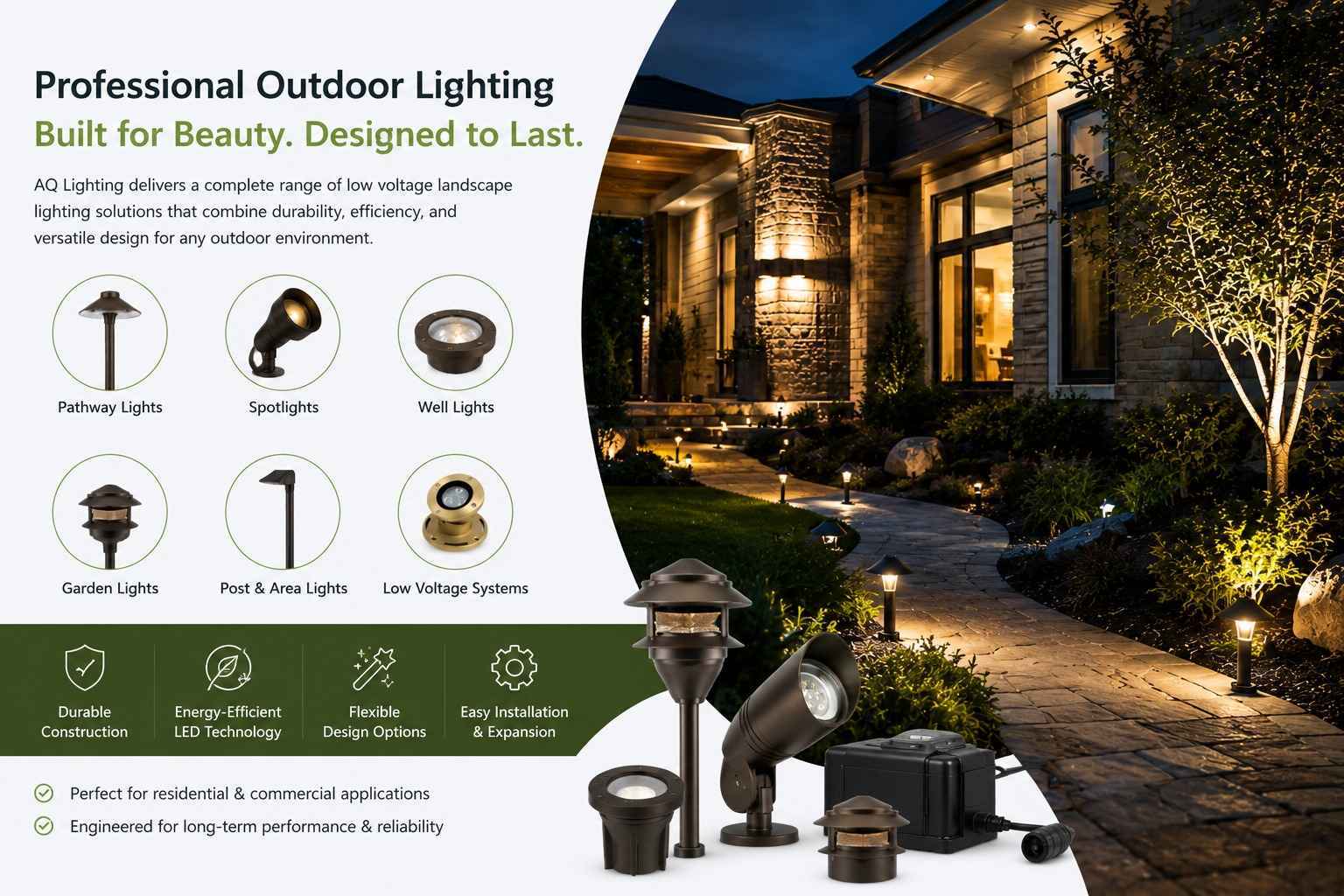
For homeowners and contractors looking for dependable outdoor lighting solutions, AQ Lighting's Garden & Landscape Lights Collection offers a wide selection of professional-grade fixtures designed for outdoor environments. Their product range includes landscape lights, pathway fixtures, spotlights, well lights, decorative garden lighting, and low-voltage systems that support both residential and commercial applications.
What makes AQ Lighting particularly appealing is the combination of durability, LED efficiency, and design flexibility. Whether you are building a simple pathway lighting system or planning a large-scale landscape project, their outdoor lighting solutions provide options suitable for virtually any application. Homeowners seeking reliable outdoor upgrades and contractors searching for scalable lighting solutions can find products designed specifically for long-term performance.
Good Landscape Lighting Starts With Good Planning
The best low voltage landscape lighting systems are not necessarily the brightest. They are the ones that feel intentional. A successful lighting design balances safety, functionality, ambiance, and efficiency. It highlights the most important features of the property while creating comfortable outdoor environments people actually enjoy using.
Whether you are installing a few pathway lights around a garden or designing a complete outdoor lighting system for a large property, understanding transformers, voltage drop, fixture selection, and installation planning will help ensure better long-term results. Because when landscape lighting is done correctly, your property does not simply look better at night. It becomes an entirely different experience.
FAQs
➜ What is low voltage landscape lighting?
Low voltage landscape lighting is an outdoor lighting system that typically operates on 12 volts using a transformer, making it safer, energy-efficient, and ideal for residential and commercial landscapes.
➜ How do I choose the right transformer for landscape lighting?
Add the total wattage of all fixtures in your system and choose a transformer with at least 20–30% extra capacity to allow for future expansion.
➜ What causes voltage drop in landscape lighting systems?
Voltage drop occurs when electrical power decreases as it travels through long cable runs, which can cause fixtures farther from the transformer to appear dimmer.
➜ What types of fixtures are used in low voltage landscape lighting?
Common fixtures include pathway lights, spotlights, garden lights, in-ground lights, deck lights, and accent lighting designed to enhance outdoor spaces.
➜ Are low voltage landscape lighting kits easy to install?
Yes, Many landscape lighting kits are designed for straightforward installation and are a popular option for homeowners looking to upgrade outdoor lighting with minimal complexity.