Outdoor LED Rope Lighting: Waterproof, Dimmable Options for Patios and Displays
AQ Lighting Oct 6th 2026
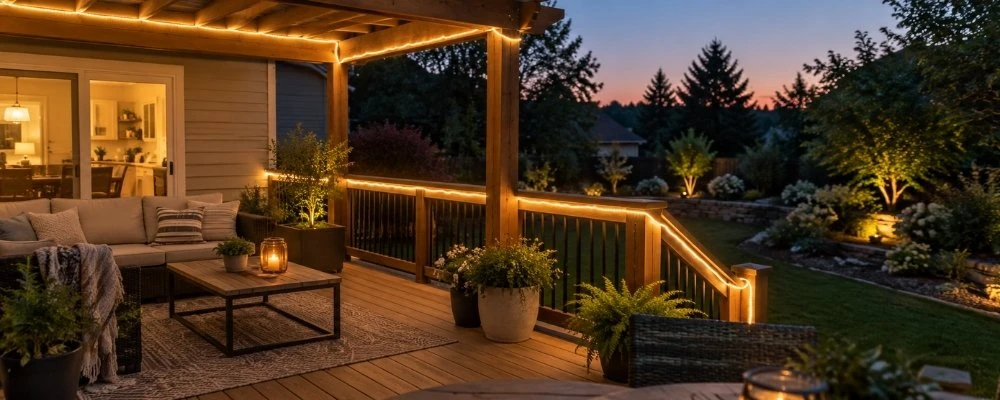
A patio can feel more welcoming when its edges are softly illuminated. A deck becomes easier to navigate when steps and railings are visible after dark. For both uses, outdoor LED rope lighting can provide a continuous line of light along a surface without the separated bulbs of traditional string lights.
Rope lights have LEDs enclosed in flexible tubing. That form makes them useful for outlining straight edges and gentle curves, such as a railing, pergola, or architectural feature. They work best as accent or marker lighting. They are not usually a substitute for a brighter fixture where people need broad, task-level illumination.
The right result depends on choosing a rope light made for the location, planning the run before installation, and using compatible mounting and power accessories.
Where outdoor rope lighting works well
Start by deciding what you want the light to do. A single installation might outline a feature, help mark a walking route, or add color to a seasonal display. Choosing one primary purpose helps keep the design clean.
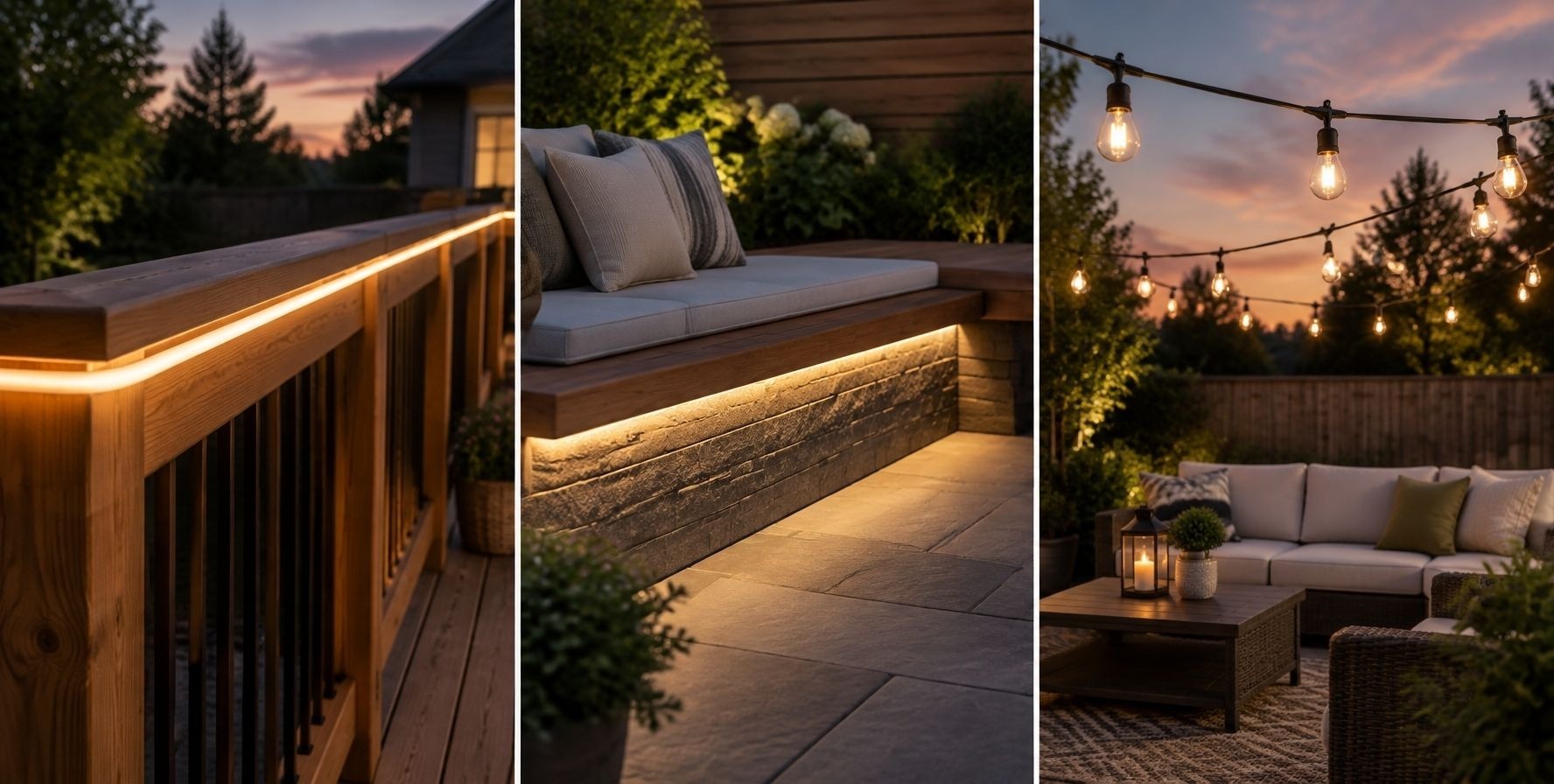
- Decks and patios: Follow a railing or the underside of a built-in bench to define the space.
- Steps and walkways: Add a visible accent along an edge, while using appropriate step or pathway fixtures where stronger illumination is needed.
- Pergolas and covered seating: Trace a beam or perimeter to give the area a gentle glow for evening use.
- Fences and architectural details: Use a straight run to emphasize a border, column, or entrance feature.
- Seasonal displays: Use color options, including blue rope lights, to add a decorative accent. Confirm that the product and its connections are suitable for the exact outdoor location.
For a layered plan, combine rope lights with a suitable pathway lights. Rope lighting can define the edge; a separate fixture can illuminate the area people walk through.
Choose the right voltage and run length
Before ordering, measure the route and note where the power source will be. Measure along the actual path, including corners and changes in direction. Add a modest allowance for routing and connections, but do not assume that a longer roll can be connected in any configuration.
Rope lights are sold in different voltage systems, and the correct choice depends on the product, the installation, and the manufacturer’s specifications. AQ Lighting lists both 120V rope lights and low-voltage rope lights. These are different systems; their power cords, connectors, compatible controls, and allowable run lengths may differ.
Before choosing a length, check:
- The voltage and product type.
- The manufacturer’s maximum run length and any specified cut intervals.
- Which power cord, connectors, and end caps the product requires.
- Whether the setup needs a controller or dimmer.
- Where connections will sit and how they will be protected.
Do not cut a rope light just to make it fit. Only cut at the marked intervals specified for that exact product, and use the compatible accessories required to finish the cut end.
Check the outdoor rating, including connections
The words “outdoor” and “waterproof” should always be verified against the product specifications. Ratings vary among models, and they may not mean the same thing for every part of an installation. A rope may have an outdoor rating while a power connection, splice, or end cap needs separate protection.
For example, AQ lists specific products with an IP65 rating, including this 150-foot warm white LED rope light. Check the individual product page before assuming another color, length, or voltage has the same rating.
For a reliable outdoor setup:
- Select a model rated for the location where it will be installed.
- Keep plugs and connectors protected as directed by the manufacturer.
- Use the correct end caps and connection seals for the product.
- Avoid placing a connection where water can collect.
- Recheck the installation after severe weather or seasonal changes.
The important question is not simply whether the tube is weather-resistant. The entire installation, including the power connection and any cut ends, needs to follow the product instructions.
Pick a color and dimming option that fit the space
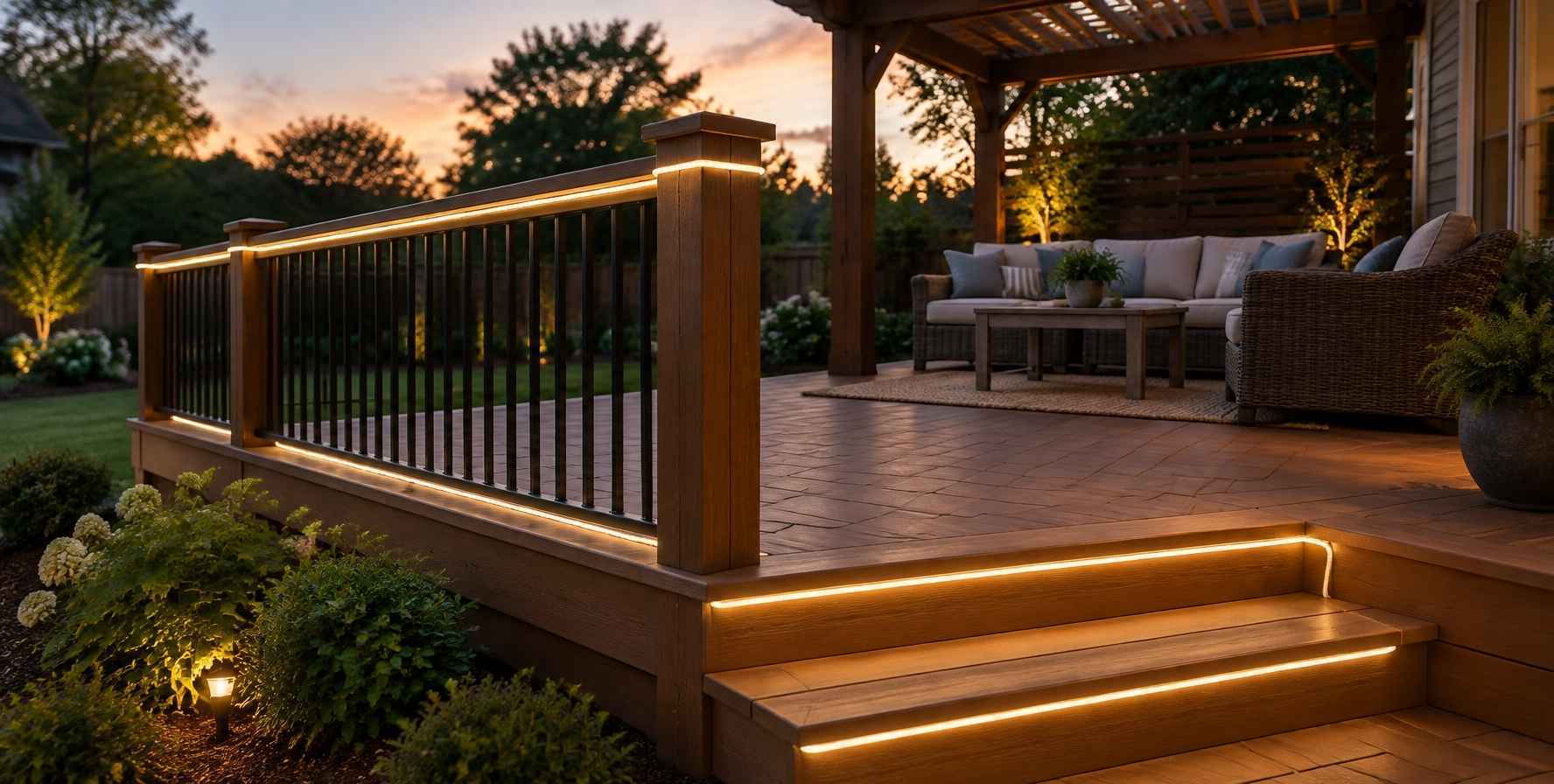
Color affects how an outdoor area feels. Warm white can give a deck or patio a relaxed, inviting look. Cooler white can appear crisper around modern architecture. Blue or other colored rope lights can suit a themed display or an accent where the color itself is part of the design.
For everyday use, consider how the light will look alongside nearby fixtures and the building exterior. A single, consistent color often makes an architectural outline feel more cohesive. For a holiday display, a more vivid color may be appropriate.
If you want a dimmable rope light, check both the rope light and its control components. LED products are not automatically compatible with every dimmer. Confirm the required dimmer, rectifier, controller, and voltage before combining parts. AQ has separate rope light accessories for connections, controls, and mounting; use the product details to verify compatibility.
Use clips or channels for a neat installation
A clean mounting plan helps the light follow the intended line and stay in place. Rope lighting clips can secure a run at intervals, while channels can create a more continuous, finished appearance. The right choice depends on the rope’s diameter, mounting surface, route, and product instructions.
AQ lists rope light mounting clips and clear mounting channels in its accessories collection. Check that the accessory fits the specific rope light before ordering.
A simple planning sequence can help:
- Mark the route with removable tape or a pencil.
- Test the light before mounting it.
- Place clips or channels according to the manufacturer’s directions.
- Leave enough room for corners without forcing sharp bends.
- Position the power connection where it can be reached and protected.
Avoid staples, nails, or fasteners that could pierce or crush the tubing. Unplug the light before installation or adjustment, and follow the manufacturer’s instructions for cutting and connecting. For hardwired work or uncertain electrical connections, use a qualified electrician.
Rope lights, tape lights, and string lights
These lighting types can all work outdoors when the specific product is rated for that use, but they create different effects.
- Rope lights have LEDs inside flexible tubing and create a continuous line suited to outlining edges.
- Tape lights are flat and often used for concealed or close-to-surface applications.
- String lights use spaced bulbs suspended across an area, making them a more visible decorative feature.
Choose based on the look and location you want. Rope lighting is a good fit when you want to trace a railing or border. String lights may work better when the goal is overhead patio ambiance. Tape lights may suit a concealed detail. AQ’s rope light collection includes several formats, so compare the product descriptions and accessory requirements before selecting one.
A quick project checklist
Before purchasing, confirm the route, approximate length, power location, voltage, outdoor rating, color, and mounting method. Then check that the required cord, connectors, end caps, dimmer, or controller are compatible with the chosen model.
This extra planning helps prevent common problems such as ordering the wrong voltage, running short at a corner, or discovering that a preferred dimmer does not work with the light. When the details are clear, rope lighting can add a defined, finished glow to a deck, patio, garden feature, or seasonal display.
AQ Lighting’s rope-light range includes options across different voltages, lengths, colors, and accessories. Compare the specifications for each model and contact the lighting team if you need help matching a rope light to your project.
FAQs
➜ Are rope lights suitable for outdoor use?
Some are. Choose a model whose product specifications identify it for the intended outdoor location, and protect connections as instructed. Ratings vary by product.
➜ Can I cut LED rope lights to length?
Only if the product is designed to be cut, and only at its marked cut points. Use the compatible connector and end cap specified for that model.
➜ Do outdoor rope lights need clips?
Clips or channels can help hold a rope light in a neat, secure line. Check the product diameter and mounting guidance to select compatible accessories.
➜ Can I use a dimmer with LED rope lights?
Only when the rope light and its power components are compatible with that dimmer. Confirm requirements on the specific product page before purchasing.
➜ What color rope light should I choose for a patio?
Warm white is a common choice for a relaxed patio accent. Cooler white or blue rope lights can suit a more modern or themed display. Consider how the color will look beside other outdoor fixtures.