Raw Copper and Brass Patina: How Outdoor Lighting Naturally Evolves Over Time
AQ Lighting May 10th 2026
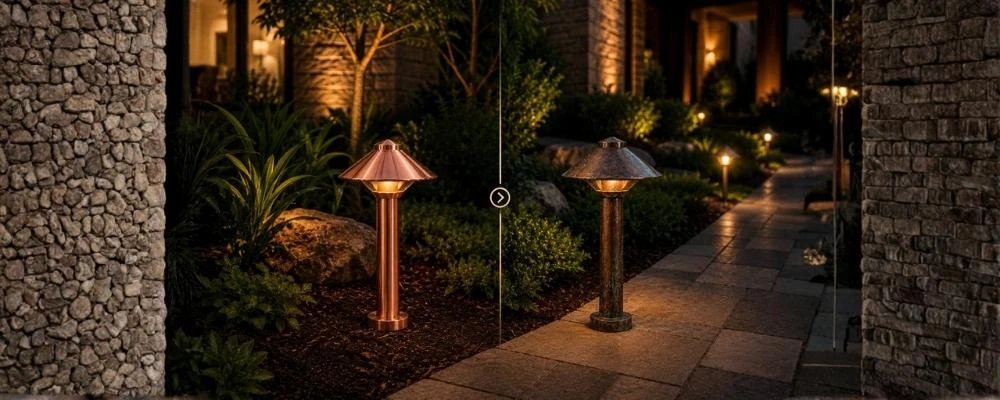
One of the most beautiful features of raw copper and brass lighting fixtures is that they are never “finished” in the traditional sense; they are always evolving. When exposed to outdoor weather conditions, both materials naturally change in appearance, creating a living finish that improves with age instead of deteriorating.
How Raw Copper and Brass Change Over Time
In outdoor environments, oxidation slowly transforms the surface:
- Raw copper gradually deepens into a rich dark red-brown tone, eventually developing a layered, antique character.
- Raw brass shifts into a deeper dark brown finish, becoming more refined and grounded over time.
Unlike paint or coatings that fade, these natural finishes do not lighten or wear off. In fact, they deepen and become more visually rich as time passes. This is not damage, it’s a protective transformation.
Why Patina Is Actually a Protective Layer
Many people assume discoloration means deterioration, but with copper and brass, the opposite is true. The patina that forms is essentially a protective layer of oxidation that:
- Shields the metal from further corrosion.
- Strengthens durability in outdoor environments.
- Enhances long-term performance.
This is one of the key reasons raw copper and brass fixtures are widely used in premium outdoor lighting; they don’t just age, they self-protect and evolve.
How to Speed Up the Patina Process Naturally
If you don’t want to wait months or years for that aged, weathered look, there’s a simple and effective technique to accelerate the process.
Step 1: Deep Clean the Surface
Start by thoroughly cleaning the fixture with a metal cleaner such as Brasso or Tarn-X. This step is important because it:
- Removes oils, fingerprints, and factory residues.
- Ensures an even patina development.
- Prevents blotchy or uneven coloring.
Even if you plan to let patina happen naturally, this cleaning step is still recommended.
Step 2: Apply a Yogurt Coating
Yes, plain yogurt. Once the surface is clean and dry:
- Take plain yogurt from the refrigerator.
- Apply a thick, even coat over the entire fixture.
- Ensure full coverage for consistent results.
The natural acids in yogurt help trigger oxidation faster.
Step 3: Let It Sit and Rinse
Allow the coated fixture to sit for 1–2 days, then rinse it off gently with a water spray. You’ll notice the color transformation starting almost immediately, revealing a rich, aged finish much faster than natural weather exposure alone.
Preserving the Bright, Polished Look
Not everyone wants a patina finish, and that’s completely fine. If you prefer the original bright copper or brass appearance, you can slow down oxidation by:
- Applying a clear protective coating or sealant.
- Using a light layer of protective wax.
- Performing occasional maintenance cleaning.
This helps preserve the shiny, polished look for a longer period.
Why Raw Copper and Brass Are So Popular Today
Raw copper and brass outdoor lighting fixtures are becoming increasingly popular because they offer something unique:
- Long-lasting structural durability.
- A naturally evolving aesthetic.
- Minimal maintenance requirements.
- A premium, high-end visual appeal.
They don’t just light a space, they become part of its story over time.
Final Thoughts
Whether you love the aged, weathered look or prefer a polished finish, raw copper and brass give you control over how your lighting evolves.
And with techniques to speed up or slow down patina, you can design not just for today—but for how your lighting will look years from now.
FAQs
➜ What is patina on copper and brass lighting?
Patina is a natural oxidation layer that forms on raw copper and brass when exposed to air and weather. It changes the surface color and acts as a protective coating.
➜ Does patina damage copper or brass fixtures?
No, patina does not damage the material. It actually protects the metal from further corrosion and improves durability over time.
➜ How long does it take for copper and brass to develop patina naturally?
It can take anywhere from a few months to several years, depending on climate, humidity, and outdoor exposure.
➜ Can I speed up the patina process on lighting fixtures?
Yes, after cleaning the surface, applying a natural acid like plain yogurt can accelerate oxidation and develop patina in just a few days.
➜ How do I keep copper and brass looking shiny instead of aged?
You can preserve the bright finish by applying a clear protective coating or wax that slows down the oxidation process.