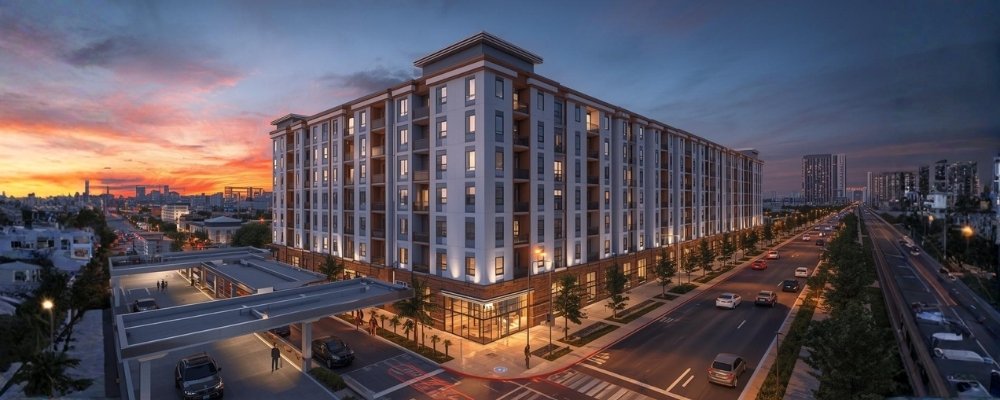
California’s passage of SB 79 marks a major shift in how housing and infrastructure development will move forward across the state. While most headlines focus on zoning reform and transit oriented housing, there is a critical layer of this change that directly impacts contractors, electricians, lighting reps, developers, and investors. That layer is lighting.
SB 79 is not a small regulatory adjustment. It fundamentally alters the pace, density, and predictability of development. As approvals accelerate and residential density increases near transit corridors, lighting demand does not simply rise gradually. It multiplies. For the lighting industry, this bill represents a structural change in volume, scheduling, and scope that will define project planning for years to come.
At AQ Lighting, we view SB 79 as a development multiplier that places lighting at the center of California’s next construction cycle.
SB 79 expands the ability to build high density residential projects near major public transportation hubs. It removes several long standing barriers that slowed development, including restrictive zoning rules and prolonged entitlement timelines.
The most important change is not just what can be built, but how quickly and predictably it can move forward. Developers now have clearer pathways to approval, which reduces risk and shortens project timelines. That certainty unlocks more projects, often clustered within the same transit oriented zones.
When development speeds up, every trade downstream feels the impact. Lighting is no exception.
Increased residential density does not create a one to one increase in lighting needs. Instead, it compounds them.
A single high density development often includes multiple layers of lighting requirements. Residential units are only one part of the picture. These projects also include shared corridors, stairwells, structured parking, outdoor walkways, and public facing spaces.
As buildings grow taller and sites become more complex, lighting scopes expand both horizontally and vertically. Fixture counts rise quickly, and lighting layouts become more critical to safety, usability, and approval processes.
This is why SB 79 projects are inherently lighting intensive by design.
SB 79 introduces a new operating reality for the construction and lighting industries. Higher residential density near transit, faster entitlement timelines, and more predictable approvals combine to create a surge in project volume.
For lighting professionals, this shift brings compressed schedules and larger orders per site. There is less time to adjust specifications, fewer opportunities to substitute products, and greater pressure to deliver exactly what is approved.
Lighting packages will no longer be treated as flexible line items. They become critical path components that must align with inspections, occupancy deadlines, and safety requirements.
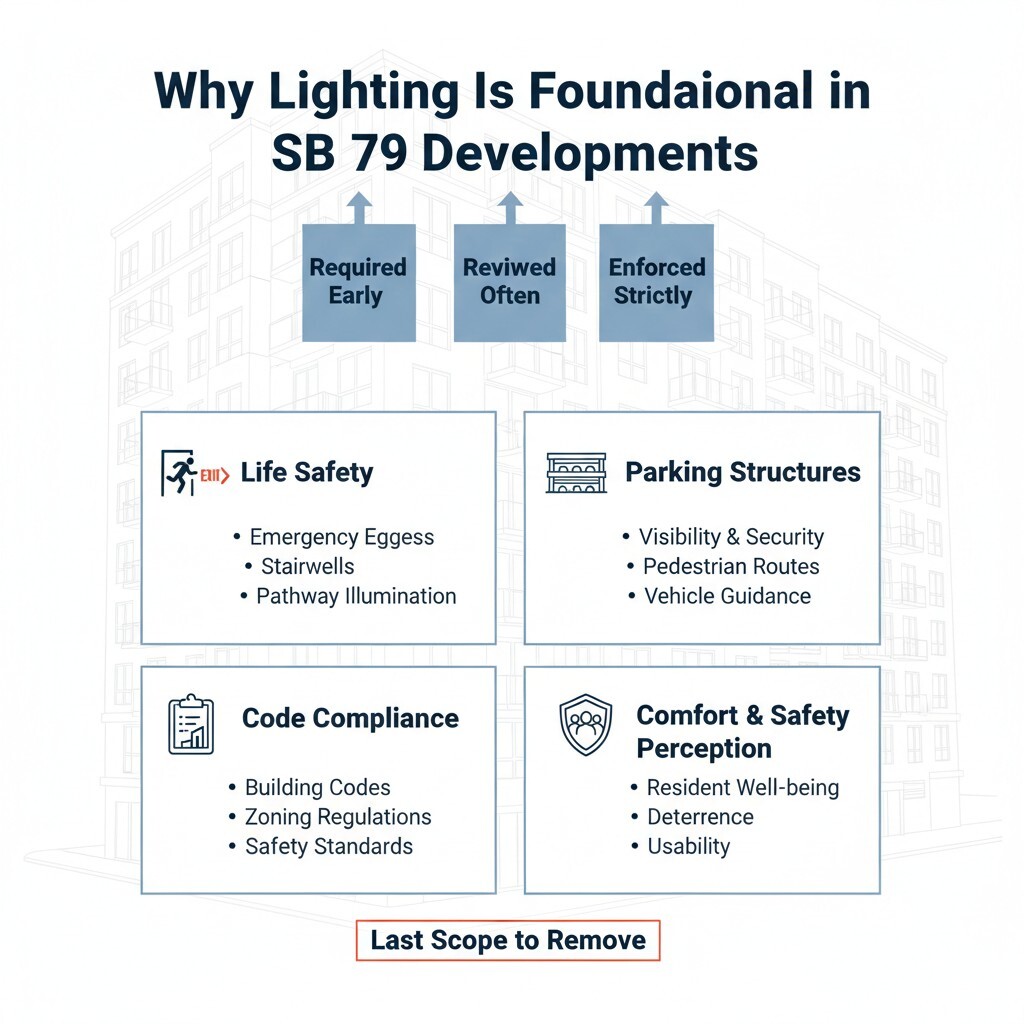
Unlike finishes or decorative elements that can be scaled back late in construction, lighting is foundational. It is required early, reviewed often, and enforced strictly.
Lighting is essential for life safety, including emergency egress and parking structures. It is mandatory for code compliance at both local and state levels. It supports basic functionality in residential, commercial, and public spaces. It also plays a major role in how occupants perceive safety, quality, and comfort.
Because of this, lighting is one of the earliest scopes to be specified and one of the last to be removed. In a fast moving development environment, that stability is rare and valuable.
As SB 79 driven projects increase, contractors and electricians will notice clear shifts in how lighting scopes are handled.
Projects will require higher fixture counts per site, often across multiple zones with different compliance needs. Procurement windows will tighten, leaving little room for delays. Energy codes and inspection standards will remain strict, even as schedules compress.
To stay competitive, teams will need to rely on lighting products that are consistent, readily available, and supported by clear documentation. Standardization and reliability will matter more than ever.
For lighting reps and distributors, SB 79 creates both opportunity and responsibility. Transit oriented developments tend to cluster, which means once activity starts in a zone, it often continues.
This opens the door for repeat specifications and long term relationships. However, it also raises expectations. Faster quoting, deeper technical knowledge, and strong logistics coordination become essential.
Distributors who can scale inventory and support quickly will be positioned to lead. Those who cannot may struggle to keep pace with demand.
From an investment perspective, lighting demand under SB 79 is structural rather than cyclical. The bill reduces entitlement risk and increases build certainty, which stabilizes development pipelines.
Every SB 79 project requires lighting to function, to pass inspections, and to meet safety standards. This makes lighting one of the most resilient scopes in these developments.
As density increases and transit oriented housing expands, lighting demand grows alongside it, regardless of aesthetic trends or short term market shifts.
AQ Lighting is positioned to support the scale and speed that SB 79 introduces. Our commercial grade lighting solutions are designed for environments where performance, compliance, and reliability are non negotiable.
We support multi story residential buildings, structured parking, pedestrian corridors, and public spaces with lighting systems that meet modern energy and safety requirements. As schedules tighten, dependable supply and consistent product quality become critical. That is where experienced lighting partners make the difference.
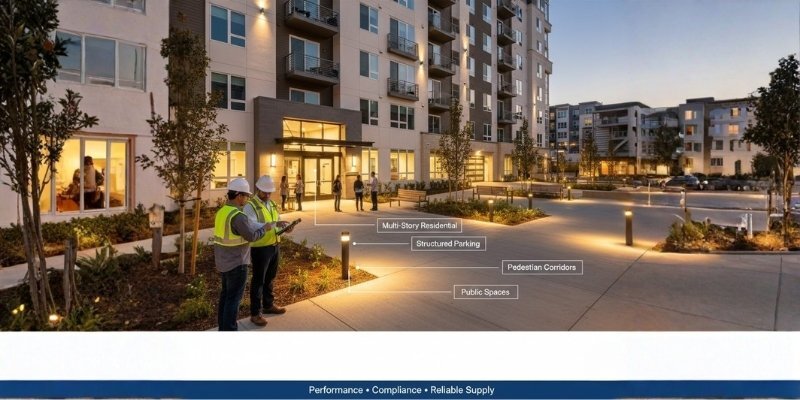
Beyond compliance, lighting plays a powerful role in how high density environments feel. Thoughtful lighting improves safety, supports wayfinding, and makes shared spaces welcoming rather than overwhelming.
As California builds denser communities around transit, lighting becomes a tool for making those spaces livable and successful. It bridges functionality and experience.
SB 79 is not just about building more units. It is about creating environments people want to live in, walk through, and return to.
SB 79 has already passed, and its effects are already in motion. The acceleration is real, and the demand is coming quickly.
For contractors, electricians, reps, and investors, the advantage lies in preparation. Understanding where density will increase, anticipating lighting volume, and aligning with reliable suppliers will determine who stays ahead.
Lighting will remain central to this transformation from the first drawing to final inspection. Those who treat lighting as foundational rather than optional will be best positioned to succeed in California’s next development phase.
AQ Lighting stands ready to support the projects shaping this new era of growth.
Don’t wait for schedules to compress—get ahead of SB 79 demand now. Call AQ Lighting at (800) 865-7221 to request pricing, project support, or a complete code-compliant lighting package that stays on track from first submittal to final inspection.
SB 79 is a California housing bill that accelerates high density residential development near transit corridors. It matters to the lighting industry because faster approvals and denser projects significantly increase fixture counts, shorten installation timelines, and create sustained demand for code compliant lighting across residential, parking, and public spaces.
SB 79 enables taller buildings, mixed use developments, and structured parking near transit. These designs require extensive lighting for life safety, compliance, and functionality. As density rises, lighting demand compounds across corridors, garages, walkways, and exterior areas rather than increasing at a simple one to one rate.
Lighting is essential for safety, inspections, and code compliance, making it one of the earliest specified and last removed scopes on a project. Unlike finishes or decorative elements, lighting cannot be eliminated without affecting occupancy approvals and operational safety.
Contractors and electricians should expect higher fixture volumes, compressed schedules, and stricter coordination requirements. Reliable product availability, clear specifications, and lighting systems that meet energy and safety codes will be critical to staying on schedule and passing inspections.
AQ Lighting provides commercial grade lighting solutions designed for high density residential, parking structures, and public spaces. With dependable supply, code compliant products, and experience supporting large scale developments, AQ Lighting helps teams meet the speed and volume demands created by SB 79 projects.