flood lights vs spotlights: Which Outdoor Lighting Option Is Best for Your Property in 2026?
AQ Lighting Jul 1st 2026
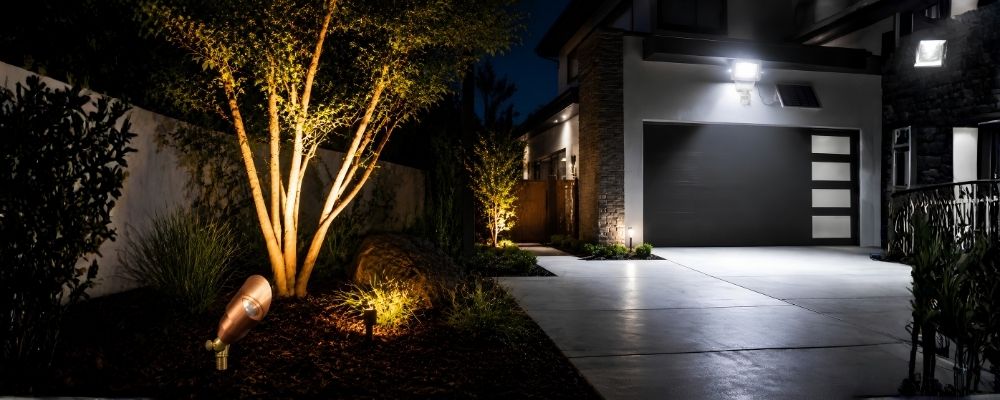
Outdoor lighting can completely transform the way a property looks and functions after dark. The right fixture can highlight beautiful landscaping, improve security, illuminate pathways, or draw attention to architectural details. Yet one question continues to confuse homeowners, contractors, and property managers alike: Should you choose a spotlight or a flood light? At first glance, both fixtures may seem similar. They produce bright illumination, work well outdoors, and are commonly used in residential and commercial applications. However, their purpose, beam spread, and lighting effects are dramatically different.
Choosing the wrong fixture can leave important areas too dark, create unwanted glare, or prevent you from achieving the visual impact you want. In this guide, we'll break down the differences between a spotlight and a flood light, explain where each works best, and help you determine which option is right for your project.
Why Understanding Beam Angle Changes Everything
The biggest difference between a spot light and a flood light comes down to one simple concept: beam angle. Beam angle refers to how widely a fixture spreads light. A spotlight produces a narrow beam that concentrates illumination on a specific target. A flood light produces a much wider beam designed to cover a larger area. Think of it this way.
Imagine using a flashlight in the dark. If the beam is narrow and focused on a single object, it behaves like a spotlight. If the beam spreads broadly across an entire area, it functions more like a flood light. Understanding this distinction makes it much easier to choose the right fixture for your outdoor lighting goals.
What Is a Spotlight?
A spotlight is designed to direct light toward a specific object, feature, or area. Rather than illuminating everything around it, the fixture focuses attention on a single point. This makes spotlights ideal for accent lighting and decorative applications. Homeowners frequently use landscape spotlights to highlight features such as:
- Mature trees
- Architectural details
- Garden sculptures
- Water features
- Flagpoles
- Decorative stonework
Because the beam remains concentrated, spotlights create visual drama and depth within a landscape. Professional lighting designers often rely heavily on spotlights because they help establish focal points and make outdoor spaces feel more dynamic.
What Is a Flood Light?
A flood light serves a very different purpose. Instead of highlighting one specific feature, flood lights are designed to illuminate large areas evenly. Their wider beam spread makes them ideal for functional lighting applications where broad visibility is important.
Common uses for outdoor flood lights include driveways, parking areas, building exteriors, recreational spaces, and large backyard zones. Flood lighting improves visibility, increases safety, and helps people navigate outdoor environments more comfortably. While spotlights create visual emphasis, flood lights create practical illumination.
Spotlight vs. Flood Light: Which Produces More Brightness?
Many people assume flood lights are always brighter. That is not necessarily true. Brightness is measured in lumens, and both fixture types can produce high lumen output. The difference is how that light is distributed. A spotlight concentrates its brightness into a narrow beam, making the target appear intensely illuminated.
A flood light spreads the same brightness over a larger area, creating broader but less concentrated coverage. This is why a spotlight often appears brighter when viewing a specific object, even if the actual lumen output is similar. The decision should not be based solely on brightness. It should be based on how you want the light distributed.
Why Spotlights Are Perfect for Landscape Design
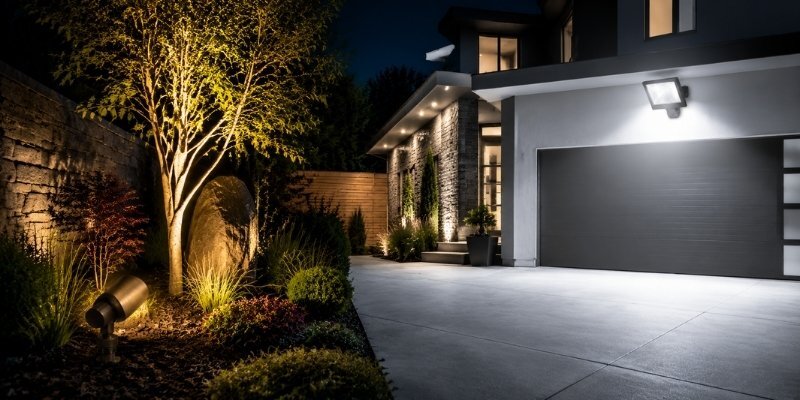
One of the biggest outdoor lighting trends in 2026 is layered landscape lighting. Rather than illuminating everything equally, homeowners are creating depth by highlighting selected features throughout the property. This is where spotlights truly shine.
A carefully positioned spotlight can transform an ordinary tree into a dramatic focal point. It can draw attention to stonework, accentuate textures, and create shadows that add character to the landscape. Because of this precision, landscape spotlights remain one of the most valuable tools in professional outdoor lighting design. For homeowners focused on aesthetics, spotlights often deliver the greatest visual impact.
Why Flood Lights Are Essential for Security
When safety and visibility are the primary objectives, flood lights usually provide the better solution. Large outdoor areas require broad illumination to eliminate dark zones and improve visibility. This is why security flood lights are commonly installed around:
- Driveways
- Garages
- Side yards
- Parking areas
- Commercial properties
- Building entrances
The wide beam helps deter unwanted activity while making outdoor spaces feel safer and more accessible. Many modern LED flood lights also incorporate motion sensors, adding an extra layer of security and energy efficiency.
Driveway Lighting: Spotlight or Flood Light?
Driveways often benefit from a combination of both fixture types. Flood lights provide the broad visibility needed for vehicles and pedestrians. They help illuminate large sections of the driveway while improving overall safety. Spotlights, on the other hand, can be used to highlight landscape features surrounding the driveway, creating a more polished appearance. The most effective driveway lighting designs often combine functional flood lighting with decorative accent lighting. This layered approach balances practicality with aesthetics.
Tree Uplighting: Why Spotlights Usually Win
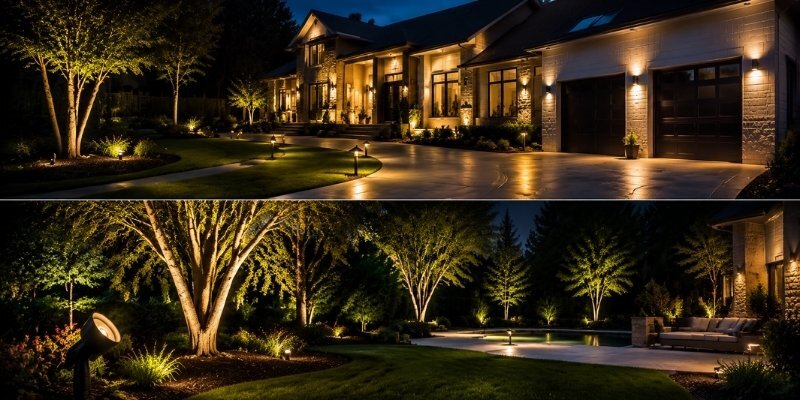
Tree uplighting has become one of the most popular landscape lighting techniques. The goal is to direct light upward through branches and foliage to create depth, texture, and visual interest. For this application, spotlights are typically the preferred choice. The focused beam allows designers to target specific portions of the tree while creating dramatic nighttime effects. Flood lights can sometimes be used for larger trees or broader canopy coverage, but spotlights generally provide more control and better visual results. When homeowners want a "wow factor" in their landscape, tree uplighting often delivers exactly that.
Commercial Properties Often Need Both
Commercial projects rarely rely on a single lighting type. Instead, they use a combination of spotlights and flood lights to achieve different objectives. Flood lighting may be used to illuminate parking lots, entrances, walkways, and service areas.
Spotlights may be used to highlight signage, landscaping, architectural elements, or branding features. This layered strategy creates a professional appearance while maintaining safety and visibility throughout the property. For contractors and facility managers, understanding how these fixtures complement each other is essential for successful project planning.
Why LED Technology Has Changed Outdoor Lighting
Modern LED spot and flood lights offer significant advantages compared to older lighting technologies. They consume less energy, generate less heat, require less maintenance, and provide excellent long-term performance. LED technology also allows manufacturers to create more compact fixtures with improved beam control and higher efficiency.
For both residential and commercial projects, LED lighting has become the preferred choice because it delivers better value over time. This is especially important for outdoor applications where fixtures may operate for several hours every night.
Why AQ Lighting Is a Trusted Source for Spot and Flood Lighting
Choosing the right fixture is important, but choosing the right manufacturer matters just as much. That is why homeowners, landscape designers, and contractors often turn to AQ Lighting's Spot & Flood Lights Collection and AQ Lighting's LED Spot & Flood Lights Collection.
AQ Lighting offers a wide selection of LED spot and flood lights designed for residential and commercial applications. Their product lineup supports landscape accenting, tree uplighting, architectural lighting, security illumination, and large-area outdoor lighting projects.
Whether you need focused landscape spotlights for decorative purposes or powerful outdoor flood lights for visibility and security, AQ Lighting provides durable solutions built for long-term outdoor performance.
So, Which One Should You Choose?
The answer depends entirely on your objective. If you want to highlight a specific feature, create visual interest, or enhance landscaping, a spotlight is usually the better option. If you need broad illumination for safety, security, or large outdoor areas, a flood light will typically deliver better results.
In many cases, the best solution is not choosing one over the other. It is using both strategically. Professional outdoor lighting designs frequently combine spotlights and flood lights to achieve the perfect balance of beauty, functionality, and security.
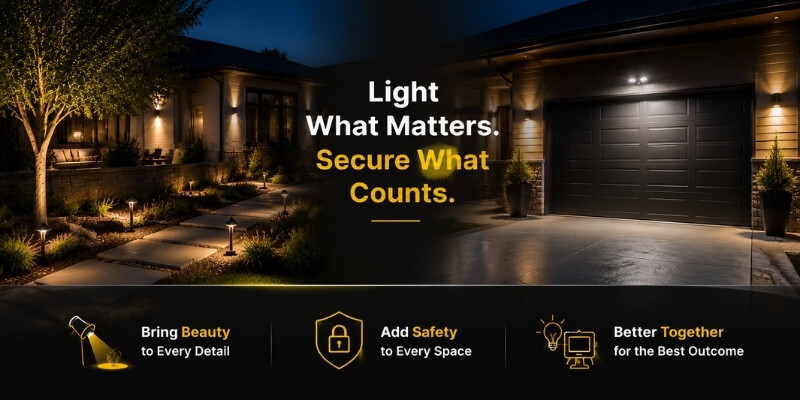
The Best Lighting Design Uses the Right Tool for the Job
The debate between spotlight and floodlight is not about which fixture is better. It is about understanding which fixture is better for a specific purpose. A spotlight creates focus. A floodlight creates coverage. When used correctly, both can dramatically improve the appearance, usability, and safety of a property.
Whether you are illuminating a driveway, highlighting a landscape feature, enhancing security, or planning a commercial project, selecting the right lighting approach will help you achieve better results and maximize the value of your investment.
FAQs
➜ What is the main difference between a spotlight and a floodlight?
A spotlight produces a narrow, focused beam for accent lighting, while a floodlight provides a wide beam designed to illuminate larger areas.
➜ Are flood lights better for security lighting?
Yes. Security flood lights are ideal for driveways, parking areas, building exteriors, and other spaces that require broad visibility.
➜ Can spotlights be used for landscape lighting?
Absolutely. Landscape spotlights are commonly used to highlight trees, gardens, architectural details, and decorative outdoor features.
➜ Are LED spot and flood lights energy efficient?
Yes. LED spot and flood lights consume less electricity, last longer, and require less maintenance than traditional lighting technologies.
➜ Should I use a spotlight or flood light for tree uplighting?
In most cases, a spotlight is the preferred choice because its focused beam creates more dramatic and controlled uplighting effects.