How Much Light Do You Really Need in a Kitchen? Ever tried prepping food in your kitchen and felt like the lighting just wasn’t doing its job? Poor lighting isn’t just inconvenient; it can affect safety, efficiency, and even the overall feel of your space.
The truth is, a well-lit kitchen isn’t about adding more lights; it’s about using the right type of light in the right place.
To get your kitchen lighting right, you need to focus on two core functions:
This is the most important type of lighting in your kitchen.
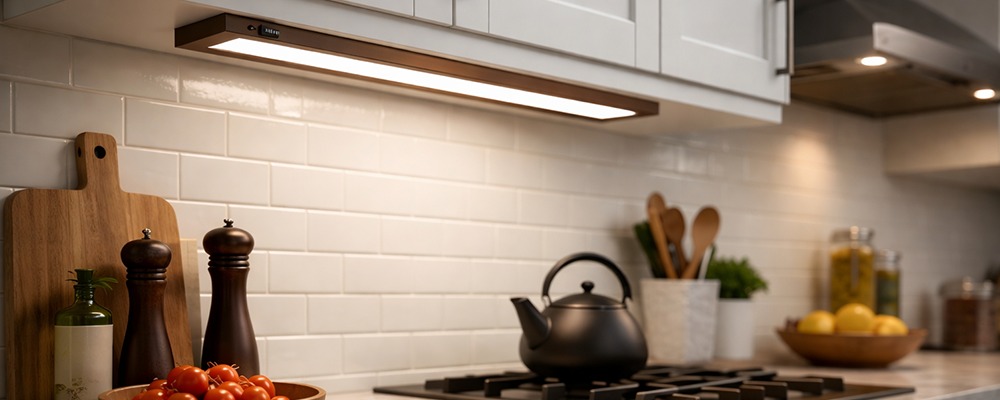
Task lighting is used in food prep areas, such as countertops, cutting stations, and cooking zones. These areas require bright, clear illumination so you can work safely and efficiently.
For this, a 5000 Kelvin (K) color temperature of under-cabinet lighting or recessed cans is highly recommended. It produces a crisp, daylight-like brightness that helps you see details clearly, reducing the risk of accidents like cutting yourself due to poor visibility.
This ensures your workspace is always properly illuminated when you need it most.
Most modern lighting fixtures come with CCT (Correlated Color Temperature) options. This means you can adjust the light's color to suit your needs.
Instead of being stuck with a single lighting tone, CCT lets you switch between Kelvin settings, giving you flexibility throughout the day.
For example:
This adaptability is what makes modern kitchen lighting both functional and versatile.
Once your task lighting is handled, the next step is creating the right atmosphere.
Ambient lighting is what makes your kitchen feel warm, inviting, and visually appealing. For this, under-cabinet lighting on a 2700 Kelvin setting is ideal. It adds a soft, golden glow that enhances your kitchen’s design and creates a comfortable environment, especially in the evenings.
This type of lighting works well for:
A common mistake is relying on just one type of lighting. But the best kitchens combine both function and ambiance.
By using brighter light for tasks and warmer light for mood, you create a space that’s not only practical but also enjoyable to spend time in.
Getting the right amount of light in your kitchen isn’t about overpowering the space; it’s about strategically layering lighting. When you combine task-focused brightness with adjustable CCT options and warm ambient tones, you create a kitchen that works perfectly at any time of day.
Under cabinet lighting with around 5000K is ideal for clear visibility during food preparation
It depends on the size, but bright task areas typically require higher lumens for safe and efficient work.
CCT stands for Correlated Color Temperature and allows you to adjust the light color from warm to cool tones.
No, 5000K is ideal for task lighting as it mimics daylight and improves visibility.
2700K is best for creating a warm, inviting atmosphere in the kitchen.