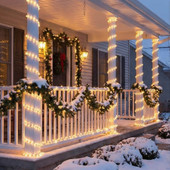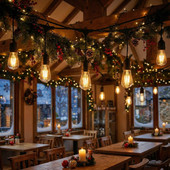
Confused between rope light and tape light for your next lighting project? You are not alone. Both options are versatile, efficient, and suitable for indoor and outdoor use, but choosing the right one comes down to how and where you plan to use it.
At first glance, rope lights and tape lights may seem similar, but their functionality is quite different.
So, the real question isn’t which is better, it’s which fits your application best.
Rope lighting is designed for durability and flexibility over larger areas.
It works best when you need to wrap, outline, or follow organic shapes. Think of applications where precision cutting isn’t the priority, but smooth, continuous illumination is.
Ideal uses for rope light:
Because it bends easily and requires fewer cuts, rope light is perfect for projects where speed and coverage matter most.
Tape light is all about accuracy and clean design.
With its ability to be cut at very small intervals, it allows you to fit lighting into tight, detailed spaces without excess material or awkward overlaps.
Best applications for a tape light:
If your project demands precision and a polished finish, tape light is the better choice.
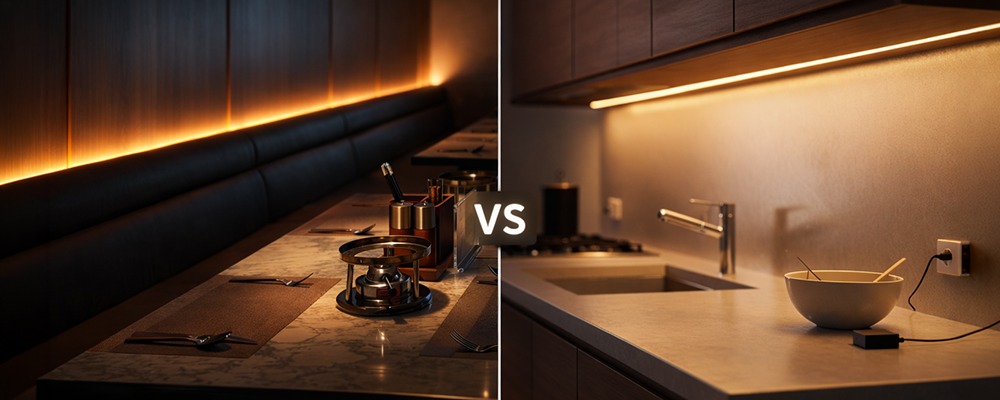
Cove lighting is one area where both options perform well, but with slightly different advantages.
No matter which you choose, cove lighting can dramatically enhance a space, making ceilings appear higher and the room feel more refined. It’s a simple upgrade that can elevate the entire environment.
There’s no one-size-fits-all answer here.
If you need flexibility and coverage, rope light is your go-to. If you need precision and detail, tape light wins. And in some cases, such as cove lighting, you can confidently use either option depending on your design goals.
The key is understanding your application first. Once you do, the right choice becomes obvious.
Rope light is flexible and can be cut every few feet, while tape light offers precise cutting at very small intervals.
Both are suitable for outdoor use, but rope light is often preferred for larger, flexible applications like wrapping trees.
Yes, a tape light is ideal for shelves and cabinets due to its precision and clean installation.
Yes, rope light is highly flexible and works well on curved or irregular shapes.
Both rope and tape lights work well; rope light is better for curves, while tape light is ideal for sharp, precise lines.