If your storefront, patio, or outdoor venue disappears after sunset, how much business are you losing every single night? Visibility directly impacts foot traffic, customer perception, and ultimately your bottom line. The right decorative and accent lighting does more than look good. It attracts attention, guides customers, and reinforces brand presence.
For contractors and business owners, choosing between rope lights, string lights, and LED strip lights is not just about aesthetics. It is about performance, durability, installation efficiency, and long term value. Let us break down each option so you can confidently select the best solution for your next project.
Rope lights, also called rope light or rope lights lights in search queries, are enclosed LED or incandescent bulbs within a flexible PVC tube. Today, most professionals prefer LED rope lights because they are energy-efficient, durable, and long-lasting.
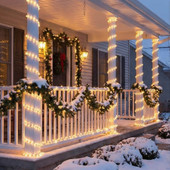
Rope lights outdoor installations are ideal for outlining architectural features, railings, signage, decks, and pathways. Their circular, diffused glow creates continuous lines of light without visible hotspots.
Outdoor rope lights are particularly effective for:
Because of their sealed tubing, rope lights outdoor applications offer added moisture resistance, making them dependable in changing weather conditions.
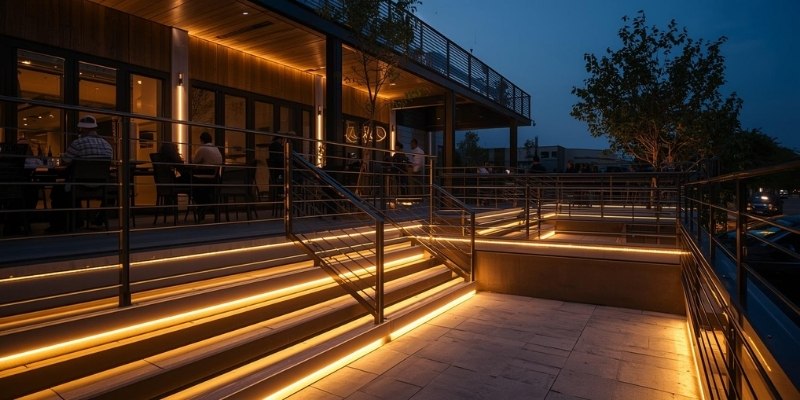
For businesses that want clean lines of light without complex installation, rope lights remain a strong option.
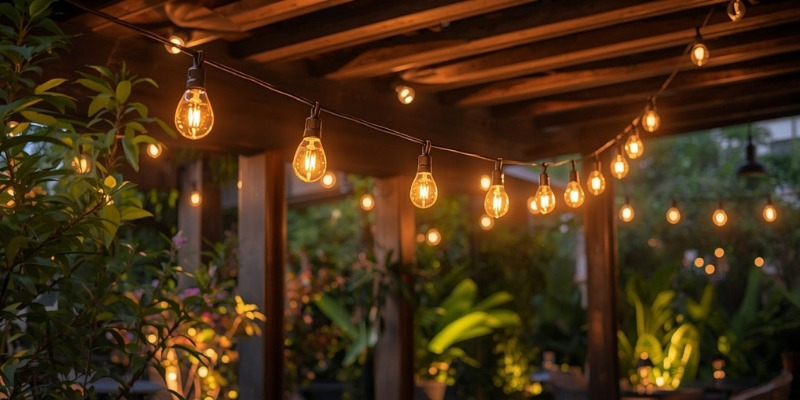
String lights feature individual bulbs spaced along a cord. From café-style bulbs to compact LED string lights, this category focuses on decorative ambiance.
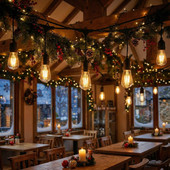
Outdoor string lights are commonly used in hospitality settings. Think rooftop lounges, event venues, and outdoor dining areas. They create warmth and atmosphere that encourages customers to stay longer.
Solar string lights are attractive for temporary or remote installations. However, for consistent brightness in commercial settings, hardwired or plug-in LED string lights often perform better.
Choose string lights when your goal is ambiance rather than precision outlining. They create visual warmth and depth, especially in open spaces. One note. Some users search for unrelated terms like lighter with string, but in professional lighting installations, safety-rated electrical components must always be used.
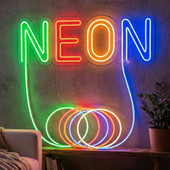
LED strip lights, also called led light strips, led strip leds, or led led strips in search behavior, are flat, flexible circuit boards populated with small LEDs. They are typically mounted with adhesive backing and can be installed in channels for a refined finish.
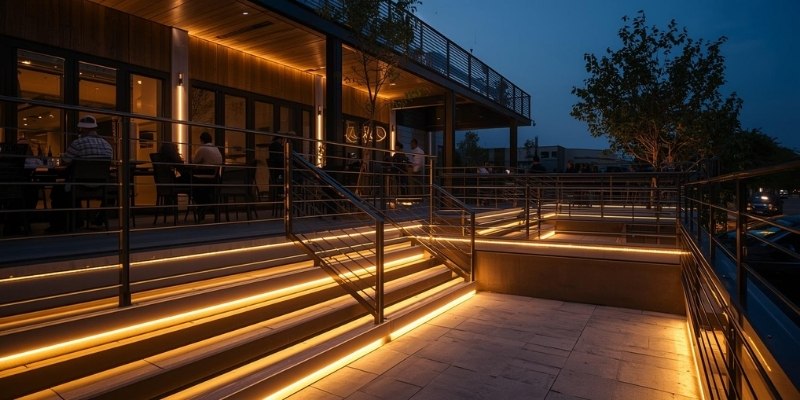
Outdoor LED strip lights are designed with protective coatings for moisture resistance. Strip led outdoor applications are ideal for modern architectural accents and concealed lighting.
LED strip lights excel in under-cabinet lighting, signage backlighting, step illumination, and coves. They produce focused light rather than the diffused glow of rope lights.
Rope lights are easy to bend and secure along curves. String lights require suspension points. LED strip lights require a smooth mounting surface and often benefit from aluminum channels for heat dissipation.
LED strip lights provide the most control, including dimming and color tuning. LED rope lights offer moderate brightness with diffused output. String lights prioritize decorative ambiance over brightness.
Outdoor rope lights and outdoor LED strip lights are built for exterior exposure when properly rated. Outdoor string lights also come in commercial grades, but bulb protection must be considered in high-traffic areas.
Your choice should align with brand identity and project goals.
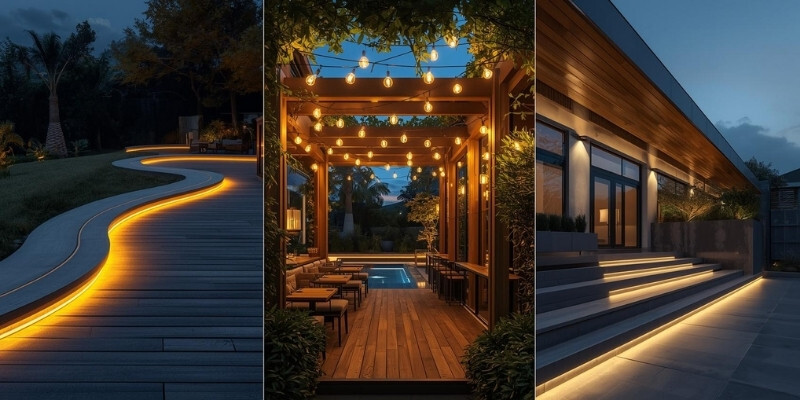
When selecting between rope lights, string lights, and LED strip lights, consider these contractor-focused factors:
Are you outlining architecture, creating ambiance, or highlighting signage? Rope lights outdoor applications are excellent for borders. Outdoor string lights enhance mood. LED strip lights provide architectural precision.
If wiring is limited, solar string lights may be an option. For long term commercial reliability, hardwired systems remain the preferred solution.
LED rope lights and LED strip lights typically outlast incandescent string lights. Fewer replacements mean lower maintenance costs over time.
Can the system expand as the business grows? LED strip systems often offer modular expansion. Rope lights can be extended within manufacturer limits. String lights can be linked, but power load calculations are essential.
Professional installation determines longevity and performance.
Always calculate total wattage before connecting multiple sections. Overloading circuits shortens lifespan and creates safety risks.
The right lighting does more than decorate. It influences customer behavior.
Combining rope lights and LED strip lights can create dimension and hierarchy in lighting design. Strategic placement increases safety while enhancing curb appeal.
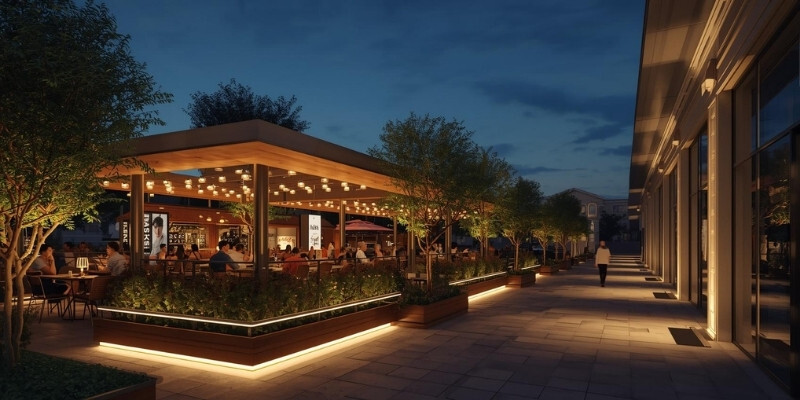
Choosing between rope lights, string lights, and LED strip lights is not about trends. It is about aligning lighting performance with business goals. From flexible LED rope lights that define architecture, to inviting outdoor string lights that enhance ambiance, to precision LED strip lights that elevate modern designs, each solution serves a purpose.
When visibility improves, perception improves. When perception improves, revenue often follows. Explore the AQLighting collection to find commercial-grade rope lights, outdoor string lights, and outdoor LED strip lights designed to perform reliably in demanding environments.
Use manufacturer-approved mounting clips spaced evenly along the run. Secure them to stable surfaces and avoid sharp bends that may damage internal wiring.
Yes, but only at designated cut marks specified by the manufacturer. Cutting elsewhere can damage the circuit.
Use compatible connectors designed for the specific rope light model. Always follow wattage limitations and seal outdoor connections.
Inspect for visible damage, loose connectors, or faulty sections. Replace damaged segments rather than attempting unsafe repairs.
First check power supply and connectors. If a section fails, verify whether it can be replaced individually or if the run must be shortened to a functional segment.
LED strip lights offer more precise directional lighting and modern aesthetics, while rope lights provide diffused, flexible outlining. The better option depends on the application.
Yes, if they are commercial grade and properly installed. Regular inspection ensures safety and longevity.
Many outdoor rope lights are weather resistant, but always confirm IP ratings before exterior installation.
No. LED strip lights are energy efficient and consume significantly less power than traditional incandescent options.
High-quality LED rope lights can last 25,000 to 50,000 hours depending on usage and environmental conditions.